Challenging years in transition from a varsity-level program in 1991 to a club-level program.
1992 and 1993 were competitive though athlete numbers began to dwindle and fundraising increased in importance after that.

1992 - 1997
|
1992 - 1997 |
1992
Gene Kininmouth “Varsity Men’s Coach, began his rowing career on an inlet off the Red Sea in Saudi Arabia and continued from high school to Monash University in Melbourne, Australia. While rowing at Monash, he won state and national titles at the senior and under 23 levels, and represented Australia at the World University Games in 1989. Apart from rowing, Gene received a Bachelor’s Degree in Economics at Monash in 1990. His other endeavors include being a sports journalist for the Melbourne Age newspaper which covered the World Championships in 1990. He now does research for the Wall Street Journal at its Los Angeles office.” Craig Webster was the novice men’s coach while still a student at UCLA due to receive his degree in Biochemistry in 1992. Webster rowed at UCLA 1986-1989 and represented the U.S.A. at the 1989 World University Games. “Coaches’ Corner – Meet Our Coaches” UCLA Strokewatch, Winter 1992, 4. After coaching at UCLA Kininmouth coached at other colleges including George Washington University (December 1999 – 2002) and then USC (July 2002 – 2008) which included making the finals of the Grand Challenge Cup of the 2008 Henley Royal Regatta. His time at USC was soon after its revival from non-existence during 1996 to 2000, after being dropped as a men’s varsity sport at USC in 1994. Following Kininmouth’s time leading USC’s men he founded the High Point Rowing Club in North Carolina, and continues to serve as a Director on their Board.
Under the Cultural and Recreational Affairs Department rules the rowing facilities would be shared with a junior program, a masters rowing program and also a recreational sculling program. The lack of NCAA championship was seen by the rowers as one reason that rowing was dropped, even though both the men and women had been nationally successful and the relatively low cost per athlete to support the team. Athletic Director Dalis was cited as contending that the team “blew an opportunity to work with the athletic department. ‘In 1985-86, there was an agreement between crew and the athletic department that they would raise money to help with the program,’ Dais said. ‘They failed to meet the agreement.’” In 1991/92 the team was to receive $60,000, thanks to Chancellor Young, in 1992/93 it was to drop to $40,000 and in 1993/94 it was to drop to $20,000. The athletes felt that representing UCLA and being a Cultural and Recreational Affairs Department club was very different. Larry Hall, “Bruin Rowing on a Shoestring”, Los Angeles Times, 2 December 1991, C-22.
Although the team status had very much changed, there were still trips to the Head of the Charles for both men and women, and additionally for the men a trip to race on the Potomac in Washington, DC, a trip to Japan and a sixth trip to the National Collegiate Championship in Cincinnati. This marked UCLA’s first season after losing its status as a varsity program. UCLA Athletic Director Peter Dalis had eliminated men’s and women’s rowing from the 1992 budget as part of an effort to save $3 million. In the fall the men recovered about $60,000 from a Department of Cultural and Recreational Services budget administered by UCLA chancellor Charles E. Young. This demotion eliminated four coaches. The rowers that remained had to borrow equipment from Loyola Marymount to practice, with their boathouse locked and their equipment up for sale. The Bruins also faced challenges from torrential rain in March that flooded their practice site and a pall of smoke from the Los Angeles riots. Team captain Todd McAtteer said, “It was very difficult not only from the emotional side but the physical, because we didn’t have access to anything.” The team had only eight male varsity rowers left. The UCLA 1991 Pacific Coast champion women’s team was reported to have “disbanded, its rowers bolting for other campuses,” Jim Rattie, “Bruins Weather the Storm”, Sacramento Bee, 24 May 1992, 45. however there were at least enough female rowers to enter the women’s novice eight, along with a men’s varsity and novice eight.
As late September arrived the rowers began without the four coaches and rigger from the previous year. The assembled students elected Todd McAteer and Catriona Fallon as the men’s and women’s club presidents. The two of them “signed a constitution declaring UCLA Crew a club sport, affiliated with the Cultural and Recreational Affairs Department.” A UCLA men’s and women’s four self-funded a trip, ten athletes each paying $450, in the fall to race at the Head of the Charles. The men’s finished fifth (second college) in the Championship four was and the women’s placed ninth (fifth college) in the women’s Championship four. UCLA Strokewatch, Summer 1992, 3. Loyola Marymount’s coach Lee Miller provided access and equipment for them to train. Still through November the remaining rowers were unable to use the boathouse since it had not been cleared after hosting the summer’s Olympic Festival and there were “legal technicalities surrounding transfer of ownership of equipment from the Department of Intercollegiate Athletics” to the Cultural and Recreational Affairs Department. Due to the delay in being able to row the number of athletes was low. The Cultural and Recreational Affairs Department hired John Kaitz to coach the varsity women, Brooks Dwinelle to coach the novice women, Gene Kininmouth to coach the varsity men and Craig Webster to coach the novice men. UCLA Strokewatch, Summer 1992, 3.
Gene Kininmouth in his one year as Bruin coach commented that the remaining rowers have developed a bond “that has strengthened them in the face of competition,” and stated that “the team’s fighting spirit is so much stronger.” Jim Rattie, “Bruins Weather the Storm”, Sacramento Bee, 24 May 1992, 45.
During their winter training camp at the Newport Aquatic Center they set the goal of defeating Cal. At the start of 1992 the team held an ergathon with each member obliged to raise $200 in sponsorship in addition to being charged club participation dues of $50 per quarter. The dues were to cover “equipment costs, USRowing membership, a racing shirt and shorts and some per-diem.” The team hosted a 60th anniversary banquet at the beginning of March to reconnect with alumni who were unaware of the status change after being dropped by the Athletic Department, to relate the history and traditions of the program to the new rowers, and to “enable CRA administrators to Meet FOUR and major donors who have kept the team afloat for the past several years.” One of guest speakers, film actor Gregory Peck, who was a former Cal rower and had been training at the boathouse for an upcoming motion picture, pledged $25,000 to support the program. UCLA Strokewatch, Summer 1992, 3.
At the San Diego Crew Classic UCLA placed fifth in the men’s Copley Cup final behind Harvard, Pennsylvania, Wisconsin and Washington. In their heat the varsity (5:51.59) had finished third behind Harvard (5:47.7) and Wisconsin (5:50.59) but had beaten Cal (5:53.62) by a length, thus preventing them from advancing to the finals. The women’s novice eight and men’s novice eight failed to advance out of their heats, having placed fourth and third. A week later UCLA (6:04.1) defeated Cal (6:09.6) in their dual race by 4.5 seconds while the novice eights were won by Cal. During the dual with USC, UCLA swept all three events.
“On Saturday the 25th [of April] the Varsity Men compete at the Potomac Regatta in Washington, D.C. On a rocky weekend which involves rough water conditions [following a week of rain], a collision with Cambridge, and difficulty with a borrowed boat, the Bruins [won their two-boat qualifier but lost to Yale and Cambridge in the semifinal, but] managed to win the petite final over Stanford, [Oxford and Northeastern]. Cornell won the grand final followed by Cambridge, Princeton and Yale. That same weekend the Novice Men race in the Newport Regatta but fail to finish due to a broken oar.” UCLA Strokewatch, Summer 1992, 4.
On May 1, the UCLA men’s varsity traveled to Tokyo for the third annual Japan Henley Regatta. They were invited because of their competitive reputation and their invitation of Keio University to the 1987 UCLA Classic. There was concern even as the journey began about departure from LAX during riots, but they made it out. They were assigned an Empacher shell designed for a much lighter crew and that was a problem in the choppy conditions. UCLA placed a length behind one of the two visiting British teams from Imperial College and the University of Bristol in their heat. They won the petite final against a field of Japanese teams including Keio. They achieved the fastest time for the regatta even though with the rough conditions their shell was filling with water and the bow was actually underwater. Todd McAteer, “Japan Henley ‘92” UCLA Strokewatch, Summer 1992, 1.
They returned to campus from Tokyo ten days prior to the Pacific Coast Championships. In the Pacific Coast Championships women’s novice eight event, UCLA finished second in the third level final. The Bruin varsity eight had posted the fastest time of the three heats. Team captain “McAtteer said he can’t imagine any better way to close the season than with a victory in the finals. ‘It’d be a dream,’ McAtteer said. ‘It’s been a whole year of challenges for us , and I can’t think of a better finish.’” Jim Rattie, “Huskies Swamp the Field”, Sacramento Bee, 25 May 1992, 68. In the final Washington stayed close with UCLA for the first 1500 meters and edged ahead of the Bruins at the finish line. “Bruin coxswain Tony Carter said he could see the Huskie challenge UCLA over the last 200 meters. ‘We wanted to hold on,’ Carter said. ‘There just wasn’t anything left.’” They finished .35 seconds behind Washington in second place in the final, and almost six seconds ahead of Cal. UCLA had defeated Cal in their dual meet and Cal had beaten Washington. “’The Huskies got lucky today. It was their year,’ UCLA coach Gene Kininmounth said ‘We were hoping for the Cinderella story. She’ll just have to keep her glass slipper on for another year.’” Jim Rattie, “Huskies Swamp the Field”, Sacramento Bee, 25 May 1992, 68. The Bruins had qualified to again attend the National Collegiate championship. The IRA had a three-way tie for first so eight crews were entered. Washington and UCLA finished fourth in the two four-boat heats. The two fourth place finishers from the heats had to race off for the seventh and final lane in the final. UCLA was eliminated in a two-boat repechage with Washington.

1993
Leif Pettersson was the head coach and Craig Webster the novice/freshman coach. Both of these coaches came with previous participation in the program. Leif had just completed three years as stroke of the UCLA varsity. “Rowing Coordinator/Head Crew Coach. Leif came to UCLA from Sweden in 1990. [He] Began his involvement in the sport in 1977; [had] won 7 gold medals at Swedish National Championships 1985-1991; National Team member [for] Sweden 1985-1991. At UCLA he stroked the Varsity eight 1990-1992 (bronze medal in national Championship 1990); PAC-10 All Conference Team 1991-1992; UCLA Most Valuable Varsity Oarsman 1992.” Craig Webster was a member of the UCLA Varsity in 1988 “(PAC-10 Champions); 1988 Royal Henley Regatta; 1989 US National Team; World University Games 1991-1992.” “Coaches’ Corner – Meet Our Coaches” UCLA Strokewatch, Fall 1992, 3. Following his time at UCLA Pettersson returned to Sweden as a national team coach, then spent time coaching in Switzerland, before serving as national technical director for the Swedish Rowing Federation from 2011 to 2012.
The end of the season roster listed twelve members on the men’s varsity squad and twenty-one on the novice squad. UCLA Strokewatch, Summer 1993, 6. The men’s team competed in five regattas during the spring season. They opened their season at the San Diego Crew Classic. UCLA finished fifth in its heat of the Copley Cup defeating Long Beach State and then placed sixth in the petite final. The UCLA Novice eight placed fourth. In separate dual races both the varsity eight and novice eight were defeated by Cal and Orange Coast. Gaining momentum at the Newport Regatta the Bruin varsity placed second to Stanford in a seven crew field. At the Pacific Coast Championships the varsity eight finished second in their heat and fifth place in the final, behind four PAC-10 varsity programs (Washington, Stanford, Cal and Oregon State). The novice eight placed fourth and the novice four placed sixth. “Season Results”, UCLA Strokewatch, Summer 1993, 3.
1994
During a three team regatta in April UCLA’s novice eight had lost to Orange Coast but the Bruin varsity four had defeated Orange Coast while only Orange Coast and the University of San Diego raced a varsity eight. At the Pacific Coast Championships UCLA’s men’s novice eight placed sixth and the lightweight four was second in the petite final.
“On 20 May 1994 the PAC-10 Crew Coaches met at Lake Natoma to discuss future participation in the PCRC (Pacific Coast Rowing Championship]. Several concerns about the operation of the competition were addressed – including issues over entry fees, race seedings, eligibility, travel subsidies, and the lack of written operating procedures. Most significantly, a number of PAC-10 coaches demonstrated concern with regard to the emphasis placed on 4’s competition by the WIRA (Western Intercollegiate Rowing Association) members. The coaches voted to recommend that the PAC-10 institutions no longer participate in the PCRC at Lake Natoma, and that instead a PAC-10 championship be held at Redwood Shores in 1995 and 1996 co-hosted by Stanford and California. The Redwood Shores race course would focus on 8’s competition and be run as a round robin of dual races. Some WIRA schools would be invited to participate to round out the schedule.”
“PCRC or PAC-10??”, UCLA Strokewatch, Fall 1994, 7.
1995
Craig Webster, UCLA ’89, was listed as the men’s coach and Sherman Knight, Stanford ’94, as the men’s assistant.
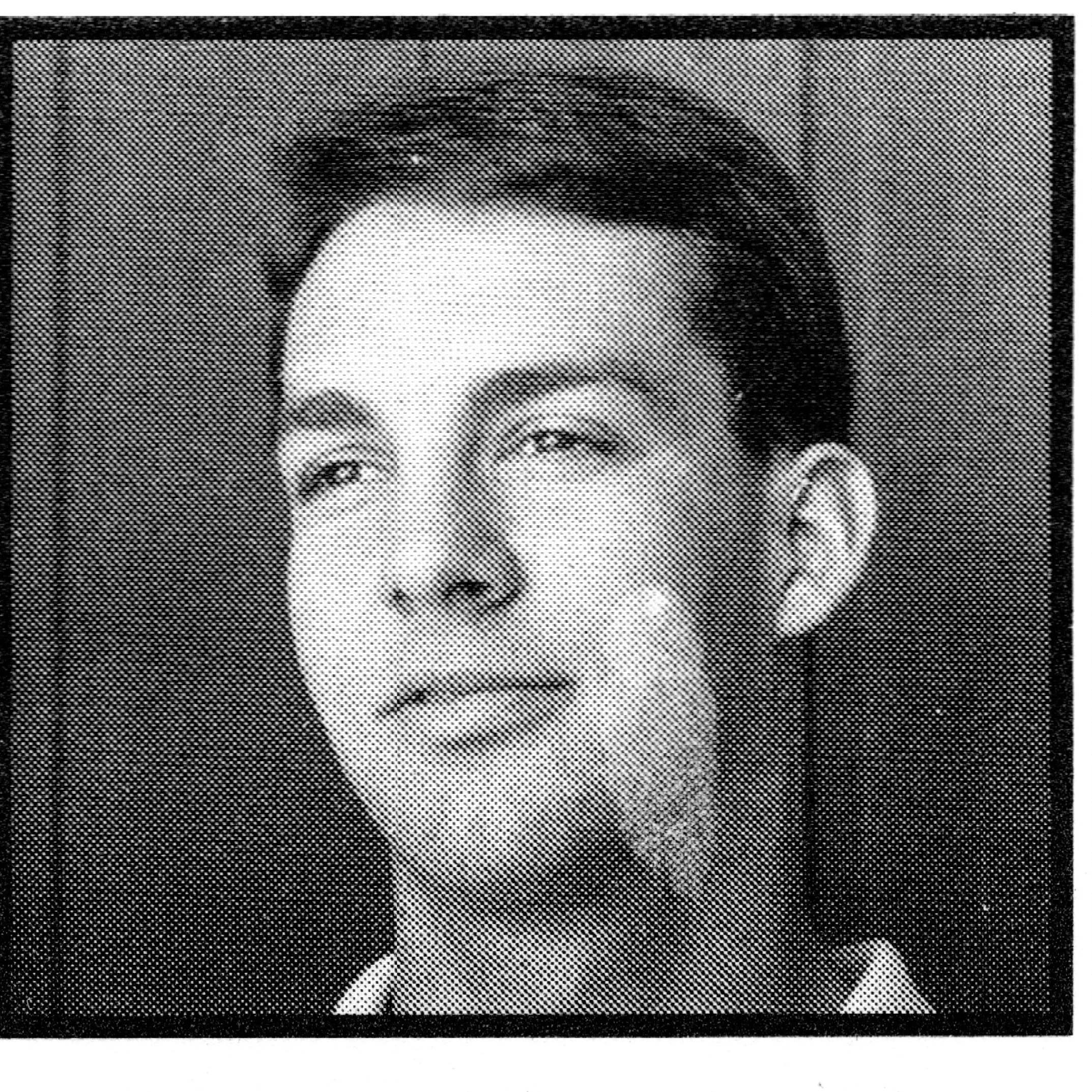
Craig Webster
The San Diego Crew Classic started the spring season. UCLA’s varsity men were no longer racing at the top level in the Copley Cup. The eight finished third in their heat and fourth in the final of the Cal Cup. The men’s novice eight won the petite final. The next weekend UCLA’s varsity eight lost to UC San Diego in a dual race. In the next race the Bruins placed second in an Orange Coast sweep of four events, including the varsity eight, in a triangular race that included the University of San Diego.
The Bruins participated in the Redwood Shores Invitational in a two-boat round robin progression. The Bruin varsity lost three two-boat races to Long Beach State, UC Irvine and California. The novice eight lost its three races to Orange Coast, UC Irvine and Oregon State. The Newport Regatta occurred prior to the Pacific Coast Championship. At Newport the men’s novice eight finished sixth, the novice four fourth, both defeating one other crew while the varsity four finished fourth/last and the varsity eight finished third/last in an elimination heat.
Following several years as a combined Pacific Coast Championship, from 1985 through 1994, the regattas separated again. The WIRA under the name “Pacific Coast Championship” was held at Lake Notoma while the PAC-10 returning to Redwood Shores including affiliate Gonzaga for 1995 and 1996. Splitting the team between the two regattas UCLA’s men’s placed fourth in petite final of novice eight and third/last in the petite final of the varsity four at the Pacific Coast Championships. The women’s team attended the PAC-10, and UCLA’s men’s varsity 8 finished in sixth (last) place losing to affiliate member Gonzaga.
The 1994/95 program budget was listed as:
Team Expenses Team Income
Operations and Maintenance $20,000 Contributions – Alumni/Friends $ 8,000
Coaching Salaries $30,000 Athlete Dues $39,000
Varsity (2 @ $12,000) Athlete Fundraising $16,000
Novice (2 @ $ 3,000) TOTAL $63,000
Equipment $ 3,000
Athlete Transportation $ 3,200
Boat Transportation $ 2,000
Athlete Housing $ 2,300
Entry Fees $ 2,500
TOTAL $63,000
The Friends of UCLA Rowing financial statement was shared in the Spring/Summer 1995 Strokewatch:
1993/94
Financial Obligation $40,000
Final phase of a 3-year obligation to ensure transition of Crew program to the Cultural and
Recreational Affairs Department
Payment $37,000
Includes proceeds from the Fall ’93 Benefit put on by the parents plus the final payment
on a major pledge. _________
Deficit ($2,300)
1994/95
Financial Commitment $8,000
Payment $5,000
(+$2,300 owed) _______
Deficit ($3,000)
Operating expenses of FOUR consist of: Strokewatch (printing and postage); mail box, banking, and all other monies are expended in direct support of the teams. Surprising to many alumni was that athletes must pay to be on the team and these “expenses have become a major factor in preventing a number of young people from rowing.” Very much different from the past when everything was provided just for being part of the team.
Lynn Welch, Strokewatch editor reported in the Spring/Summer 1995 issue that “Of the 179 women on whom we have ‘good’ addresses, only 17 made contributions ($585); of the 383 men, only 101 contributed ($5,850). Fortunately, we have support from non-alumni as well as from some parents. Of the latter, 8 contributed $940. (In case you are curious, a total of 353 Crew alums are in the ‘lost’ file – 219 men and 144 women.)”
1996
“A combination of poor recruiting years and a low retention of novice and varsity athletes resulted in UCLA’s failure to field either a men’s varsity or novice eight.” Erinn McMahan, “Coach’s Corner”, Strokewatch, December 1999, 1. This was the fifth year of rowing functioning as a club sport at UCLA. The men’s “varsity squad was reduced to a pair and the novice men struggling to hold together a four, our hope was the varsity women.” Michael Roberts, “Year in Review”, UCLA Strokewatch, Spring/Summer 1996, 1.
Michael Roberts was the program’s overall “Head Coach.” He was a 1986 graduate of Humboldt State and had coached at Humboldt State, Marin Rowing Association, the junior team at the Pacific Rowing Club, had been the US Rowing regional technical coordinator, and most immediately coached at UC San Diego. Craig Webster returned as the novice men’s coach; Ned Bader and Susan Rumsey were listed as helping Roberts with the varsity women; and Pam Chisholm and Maya Menendez as coaches of the novice women. At the conclusion of the season Webster, UCLA ’92, who had been coaching UCLA crews from 1992-1996, moved on to start a rowing program at Chapman University in Orange County.
The Bruin men’s entire season consisted to two races in the Novice 4+ on Ballona Creek. A loss March 9 to the University of San Diego and a loss to UC San Diego on April 6. There were more than 100 athletes that attended the fall interest meeting, but only eighteen women finished the season at the (WV8 third at Pacific Coast and fifth at the PAC-10) Pacific Coast Championships. There were no men competing. A number of challenges were cited in the Spring/Summer 1996 UCLA Strokewatch: registration fees of $1,500/quarter, competing with a myriad of activity opportunities, having to pay a minimum of $600 plus fund raising to participate in a program with “part time/volunteer coaches, sleeping at athlete homes on the road and rowing with aging equipment.”
The 1995/96 program budget decreased from the previous year and was rather simple:
Team Expenses Team Income
Operations and Maintenance $15,000 Contributions – Alumni/Friends $ 7,500
Coaching Salaries Team Dues/Fundraising $27,500
Varsity $15,000 Endowment $ 5,000
Novice $10,000 TOTAL $40,000
Equipment ___ 0
TOTAL $40,000
1997
Michael Roberts was the program’s overall “Head Coach.” Erinn McMahan succeeded Craig Webster as Novice Men’s Coach. He had been a four-year rower at UC Santa Barbara. This was his first year coaching.
“The women, after enjoying better numbers than the men in 1995 and 1996, experienced a similar decline in participation in 1997 and 1998.” Erinn McMahan, “Coach’s Corner”, Strokewatch, December 1999, 1. A UCLA women’s lightweight four raced to fourth place in the April 19 California Collegiate Championship. Beginning this year, the PAC-10 became a one-day event; the WIRA was under the name “Pacific Coast Championship” on the day preceding the separate PAC-10 that included non-conference colleges, both at Lake Natoma. At the Pacific Coast Championship on Saturday UCLA was represented by crews in the women’s lightweight four (third), women’s novice four (fourth) and the men’s novice four (sixth). The only entry in Sunday’s PAC-10 Championships was the women’s novice eight (fifteenth).
F.O.U.R. had a $4,500 contribution commitment for 1996/97