
Rowing ergometers

'Widowmaker' to Concept2
|
'Widowmaker' to Concept2 |
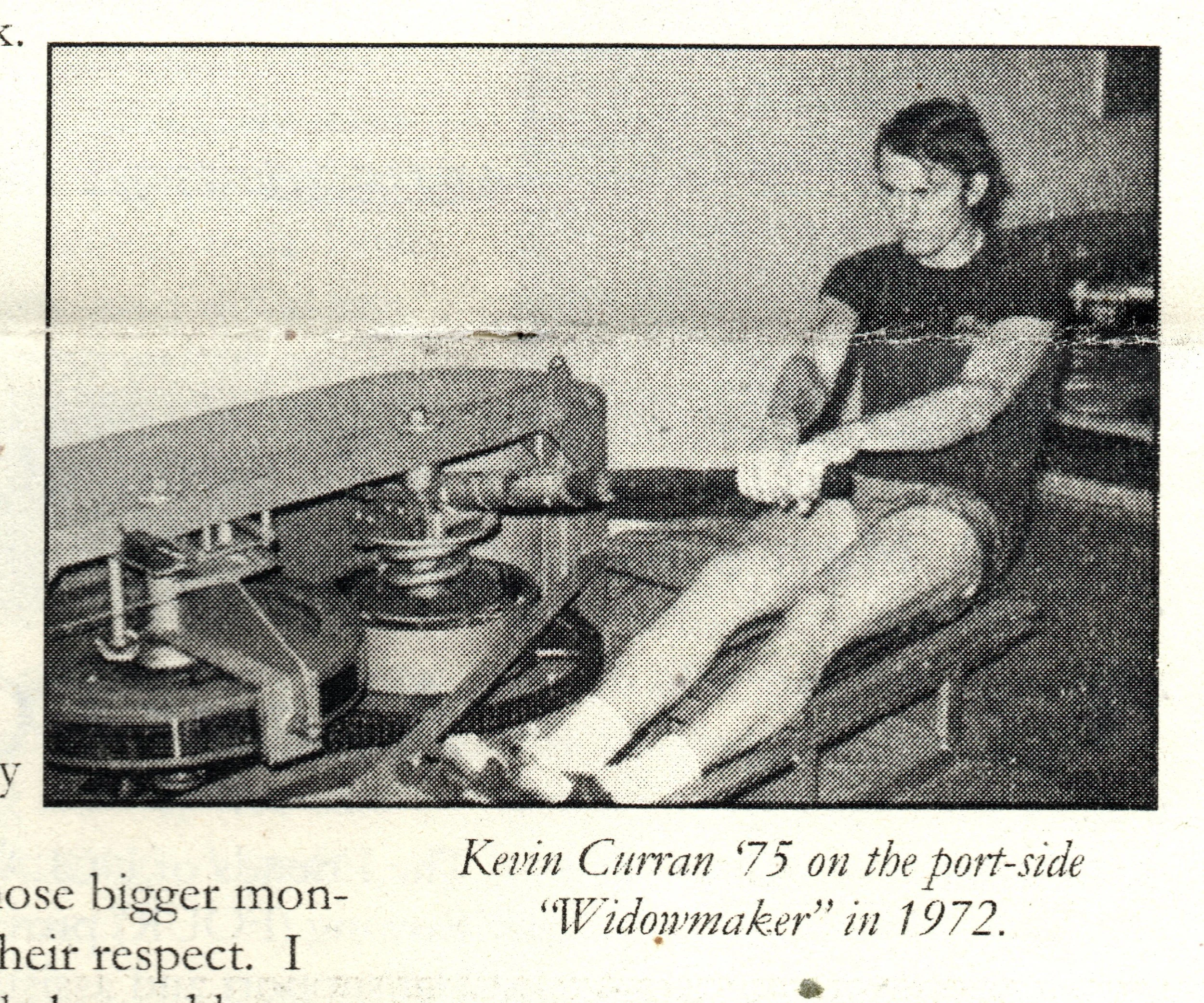
Strokewatch Nov 2007, 5.
Though UCLA is gifted by weather that allows rowing year-round the ability to measure and test athletic abilities quantitatively in the rowing motion falls to modern rowing machines. By the 1960s the coaching of rowing became more quantitative and less intuitive. A way to quantitatively measure the force generated and level of fitness of the rowers was needed. In the early 1940s a group of Australians had developed a machine called an “ergometer”, named using the Greek words for work (ergon) and to measure (metron).[1] The machine was a sweep rowing device, either a port or starboard machine and included a metal wheel turned horizontally with leather straps providing a mechanical resistance breaking mechanism. The resistance was measured in stones as the “weight in the pan” that would pull on the breaking arm. The score was the number of revolutions completed in a given time. Coxswains used a hand held strokewatch and also recorded the revolutions completed each minute.
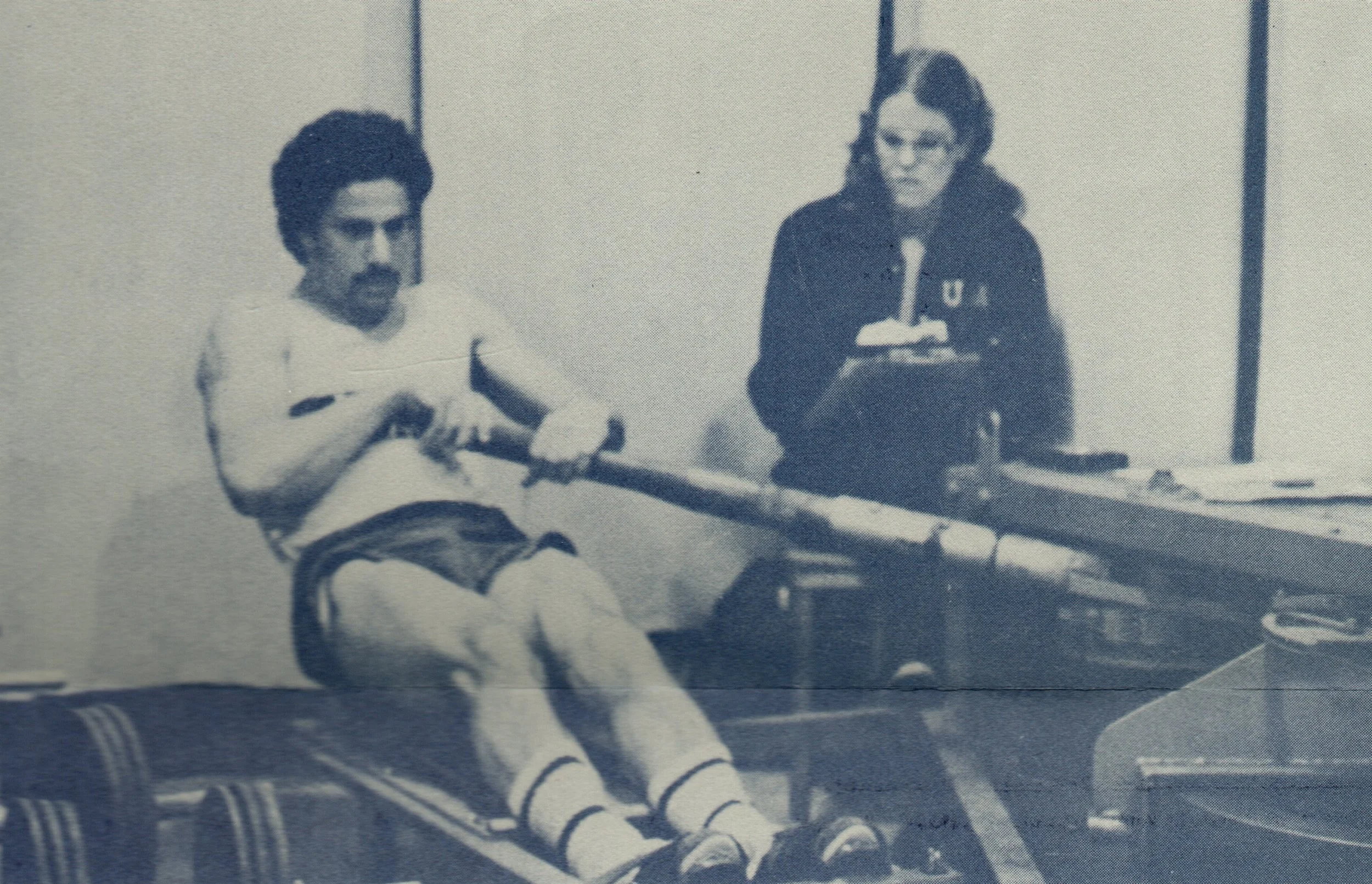
Bob Frassetto and coxswain Gail Turner in 1977
A pair of the Australian ergometers arrived at the UCLA boathouse late in 1971. There were only two other pairs of machines in the United States. One pair at Harvard and the other at the U.S. Naval Academy. In 1972 the machines were moved to room in the northeast corner of Pauley Pavilion and then later moved to an austere concrete room in that the Bruins also did weight circuits in located in Drake track stadium. They were used for testing until their replacement by Concept2 rowing machines.
In 1981 the Dreissigacker brothers Peter and Dick patented [#4,396,188] a chain driven center pull machine. It featured a bicycle wheel with twelve plastic fan blades to create wind resistance and a steel weight around the wheel to provide momentum. Load was changed by manually changing the chain between the five gears, like that of a multispeed bicycle,
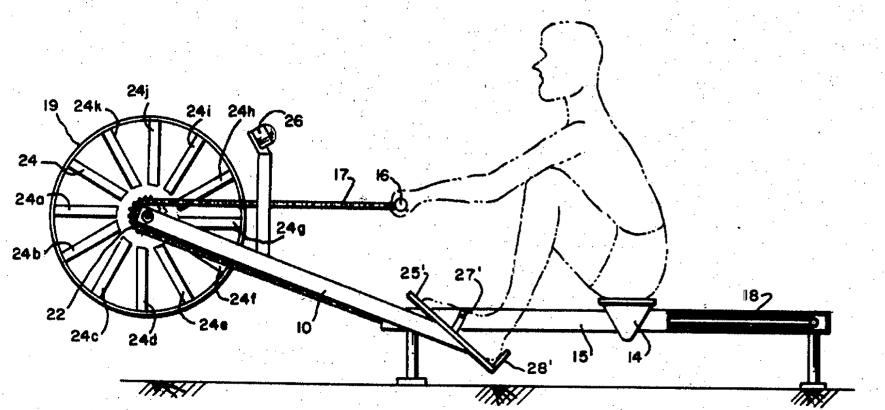
From: US Patent #4,396,188A - "Stationary rowing unit" (1981)
and the chain moved the wheel. The measurement device was a simple bicycle speedometer that gave a measure of speed and “miles”. Stroke rate and elapsed time were not indicated. This machine came to be known as the Model A, when Dreissigacker created later versions. They were less expensive than the Gamuts and provided a way to both train and test. However, something that was absent was a monitor that gave stroke rating and time in addition to work (meters, calories or watts). The Model B was released in 1986 and consisted of a metal flywheel enclosed in a metal cage. The PM1 Performance Monitor indicated strokes taken per minute, meters and time became the standard and allowed comparability of scores on any machine. Subsequent models of the ergometer, now called an indoor rower, and performance monitors provided wider range of menu options including memory and language, additional programming, could measure the drag factor to allow machines to be more finely adjusted, and have compatibility with wireless heartrate monitors. It also could generate a real-time though not recorded stroke force curve, a stroke-by-stroke bar chart and a Paceboat.
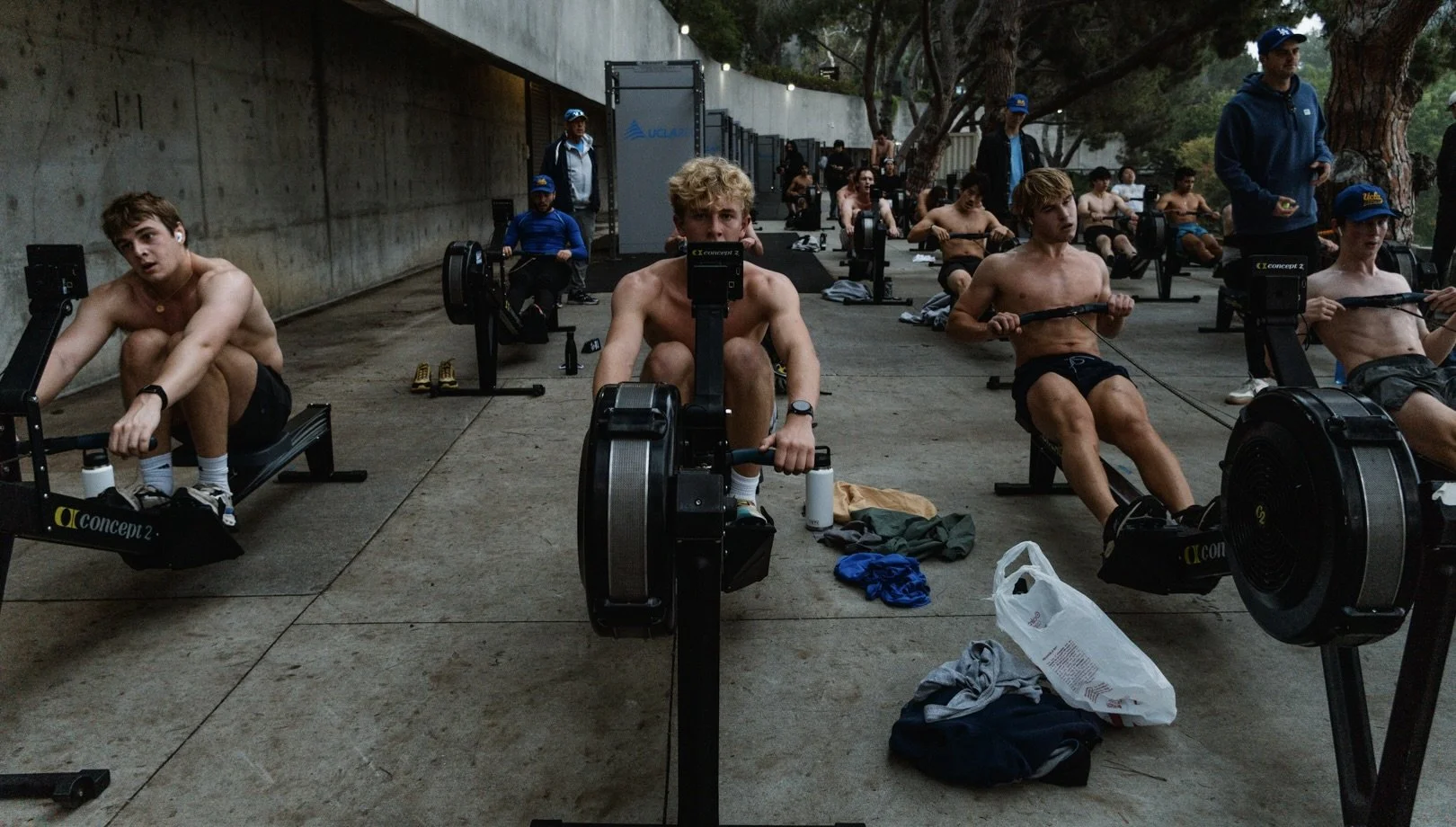
Currently at UCLA the Concept2 machine provides both training and testing opportunities on campus.
[1] Flood and Simpson, The Complete Guide to Indoor Rowing, 2.